Demand Barking
Why dogs demand bark
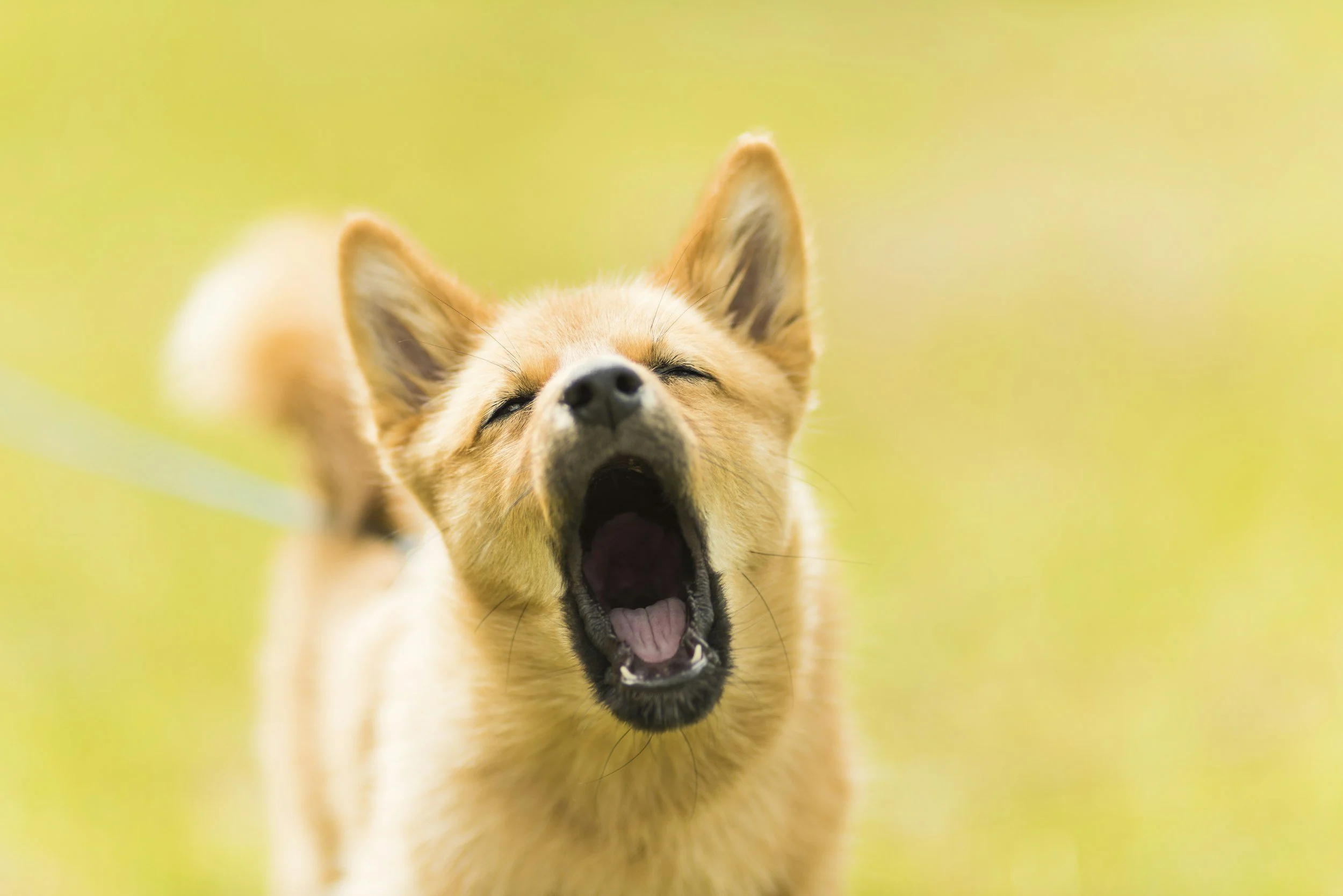
Demand barking happens because your dog has learnt that barking gets results. They may bark for food, toys, attention, to go outside, to start a game, or because they are excited and frustrated.
The important thing to remember is that barking is simply your dog's way of communicating. The goal isn't to stop them from communicating altogether, it's to teach them a more appropriate way to ask for what they want.
Every time barking successfully earns attention or access to something valuable, the behaviour becomes stronger.
The Golden Rule: Don't Reward the Barking
If barking results in your dog getting what they wanted, they have no reason to stop.
This means:
Don't throw the ball while they are barking.
Don't hand over food while they are barking.
Don't talk to them, tell them "quiet", or argue with them.
Don't make eye contact if they are barking for attention.
Even negative attention ("Stop barking!") can be rewarding for some dogs.
Instead, wait for a brief pause, even just one or two seconds of silence, before giving them what they wanted.
Your dog quickly learns:
Barking = Nothing happens.
Quiet behaviour = Good things happen.
Reward Calm Behaviour Before They Ask
One of the easiest ways to reduce demand barking is to stop waiting until your dog asks.
Throughout the day, notice when your dog is:
Relaxing quietly.
Lying on their bed.
Playing independently.
Watching the world calmly.
Sitting near you without demanding anything.
Quietly walk over and reward them with a treat, gentle praise, or a chew.
This teaches your dog:
"Being calm is what makes good things happen."
Teach an Alternative Behaviour
Instead of barking, teach your dog another way to ask politely.
For example:
Sit to ask for dinner.
Go to their mat before the ball is thrown.
Make eye contact instead of barking.
Lie down while you prepare food.
Bring a toy instead of barking for attention.
Reward these polite behaviours consistently.
Dogs naturally choose behaviours that work best.
Avoid Creating an Extinction Burst
When you first stop rewarding barking, it often gets worse before it gets better.
Your dog may:
Bark louder.
Bark for longer.
Try different types of barking.
Paw, jump or nudge you.
This is completely normal.
Imagine pressing an elevator button that usually works. If nothing happens, you press it again... harder!
Stay consistent. If you eventually give in during this stage, you've accidentally taught your dog that barking for longer works even better.
Meet Their Needs First
Sometimes barking is your dog's way of saying they genuinely need something.
Ask yourself:
Have they had enough physical exercise?
Have they had opportunities to sniff and explore?
Have they had some mental enrichment today?
Are they tired and in need of a nap?
Do they need the toilet?
Are they feeling stressed or overwhelmed?
Meeting your dog's physical and emotional needs makes demand barking much less likely.
If Your Dog Struggles to Stop
Some dogs become so excited that they find it difficult to settle on their own.
Rather than becoming frustrated:
Give them a long-lasting chew or frozen enrichment toy.
Guide them to their crate or puppy pen for a quiet rest.
Reduce exciting interactions for a while.
Reward calm behaviour whenever you see it.
Many dogs who seem "hyper" are actually overtired and benefit from structured downtime.
Remember
Your dog isn't being stubborn or trying to annoy you, they're repeating a behaviour that has worked in the past.
By consistently rewarding calm, polite behaviour and preventing barking from achieving its goal, your dog will gradually learn a much quieter and more appropriate way to communicate.